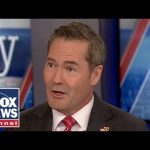


If you watched the clip circulating from CNN’s table discussion, you saw former Minnesota governor Tim Pawlenty calmly lay out what patriotic conservatives already know: in a shutdown fight the party that depends on government most is far likelier to blink first. Pawlenty’s line — that “the Democrats will fold before the Republicans” — landed like a gut-punch to the smug television class and exposed the political math the networks prefer not to talk about.
That exchange didn’t happen in a vacuum; it came amid reporting that a shutdown was imminent and would furlough thousands, delay services, and ricochet across the economy — exactly the kind of pressure that punishes a party that touts government programs as its core identity. The CNN segment itself walked through the real consequences for Americans, from air traffic disruptions to delays in Social Security services, which makes Pawlenty’s prediction about political pain and leverage anything but reckless.
Conservative voices online have rightly amplified the moment, with outlets like The Rubin Report sharing the clip and framing Abby Phillip’s stunned reaction as proof the mainstream media can’t stomach being reminded of basic political reality. Dave Rubin’s reposting pushed the sound bite into the feeds of millions, and the sudden silence on-screen said more than any studio talking point ever could.
Here’s the heart of the matter: Democrats are the party of big government, and when the machinery they run is threatened, their most loyal constituents — federal employees, contractors, and those dependent on entitlements — feel the pain first. That’s not cruelty; it’s simple politics, and Pawlenty was right to call it out, because bending under the strain is the predictable outcome when one side’s power stems from being the steward of the state rather than the champion of free enterprise.
Watching the CNN host flustered and trying to pivot is a reminder that the media’s outrage machine has rules: defend bureaucratic interests, shame resistance, and frame any conservative toughness as reckless. When a Republican points out the obvious — that a shutdown’s pain is asymmetric and that the party most invested in government programs will be under more pressure to cave — the scripted debate implodes and civility gives way to flustered deflections.
This should be a clarifying moment for Republicans and the grassroots alike: don’t negotiate from a posture of fear. If conservatives truly believe in limited government and fiscal sanity, then standing firm in the face of bluster is not cruelty — it’s accountability. Pawlenty’s prediction was not a dare; it was a strategy memo for anyone serious about getting federal spending under control.
Hardworking Americans who pay the taxes and build the businesses that sustain this country deserve leaders who will play the long game, not cable pundits who panic at every manufactured crisis. Let the Democrats scream about hardship; let them explain to their voters why the safety net should be an all-consuming job instead of a backstop. In the end, America’s future will be decided by those who defend freedom and fiscal responsibility, not by the permanent political class that profits when government swells.