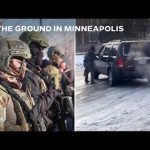
Former Acting ICE Director Jonathan Fahey didn’t mince words on national television when he warned that Minnesota’s ongoing obstruction of federal law enforcement risks forcing the federal government’s hand — including the possible invocation of the Insurrection Act to restore order. Fahey argued that when state and local leaders refuse to protect federal officers and shield professional agitators, Washington is left with limited, constitutional tools to enforce the law.
This crisis didn’t materialize out of thin air; it follows what federal officials have called one of the largest DHS operations in recent history, with thousands of agents deployed to Minnesota under “Operation Metro Surge” to target criminal immigration violations. The sheer scale of the deployment is a direct response to years of sanctuary policies and local obstruction that invited lawlessness and left federal officers vulnerable while politicians played politics.
The flashpoint that galvanized this showdown was the tragic Jan. 7 fatal shooting of Renee Nicole Good during an ICE operation in Minneapolis, an incident captured on video and fiercely debated in the public square. Independent fact-checkers and reporting confirmed the shooting remains under investigation and has become the rallying cry for protesters who are more interested in halting enforcement than seeing justice done through proper channels.
As federal agents sought to do their jobs, violent confrontations escalated: officers were ambushed, one was allegedly attacked with a shovel and broom handle and fired a defensive shot that wounded a suspect, and crowds repeatedly tried to blockade federal operations. These are not peaceful protests; this is organized interference with lawful enforcement, and citizens watching from the sidelines should be alarmed that local officials have not done enough to stop it.
Minnesota’s political leadership compounded the problem by filing lawsuits to halt federal activity, and even when judges declined to immediately block ICE operations the legal wrangling only slowed timely responses and signaled to agitators that obstruction pays. The predictable result: emboldened mobs, injured officers, and a city that looks fragile because elected Democrats prioritize optics over public safety.
President Trump has publicly threatened to invoke the Insurrection Act to end the chaos if state and local officials refuse to act, and conservative national security voices like Fahey say that is a lawful tool when federal authority is being obstructed. If governors and mayors persist in playing partisan politics while federal agents are attacked, a strong federal response is not only justified — it is necessary to protect lives and enforce the rule of law.
Hardworking Americans deserve streets where kids can play and businesses can open without the fear of mob rule or political theater. If state governments continue to shield those who assault federal officers and obstruct lawful enforcement, patriotic leaders in Washington must act decisively to restore order, defend federal personnel, and make clear that disorder will not be rewarded with restraint.